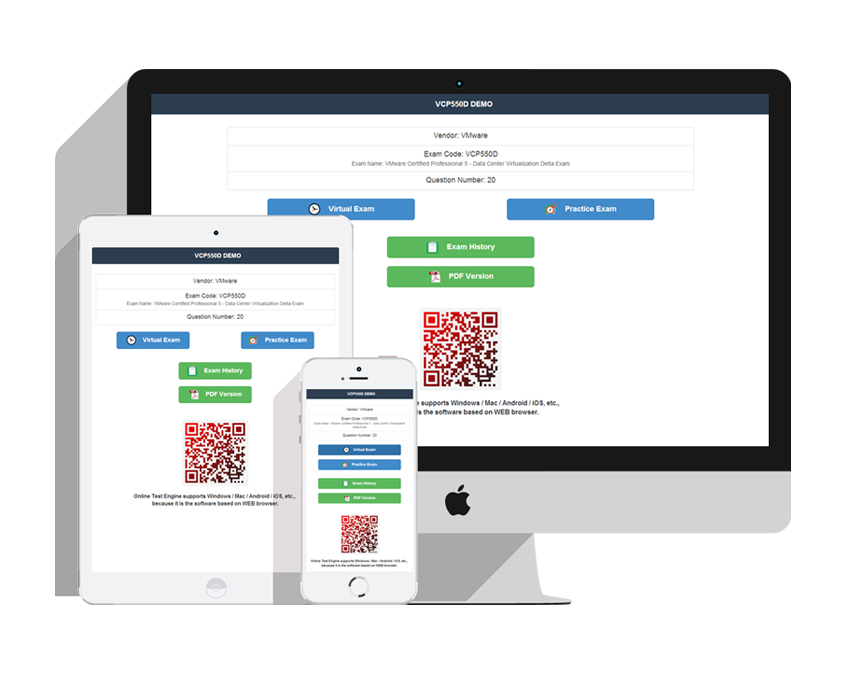
PDF Version Demo
Have you ever heard MCIA-Level-1 MuleSoft Certified Integration Architect - Level 1 valid test from the people around you? As a professional exam materials provider in IT certification exam, our MuleSoft Certified Integration Architect - Level 1 exam cram is certain the best study guide you have seen. Why am I so sure? No website like us provide you with the best MuleSoft Certified Architect examcollection dumps to help you pass the MuleSoft Certified Integration Architect - Level 1 valid test, also can provide you with the most quality services to let you 100% satisfied. Our website has a long history of offering MuleSoft Certified Integration Architect - Level 1 latest dumps and study guide. With hard work of our IT experts, the passing rate of our MuleSoft Certified Architect practice exam has achieved almost 98%. In order to make sure the accuracy of our MuleSoft Certified Integration Architect - Level 1 vce dumps, our IT experts constantly keep the updating of MuleSoft Certified Integration Architect - Level 1 practice exam. So our MuleSoft Certified Integration Architect - Level 1 exam cram will be your best choice.

Instant Download MCIA-Level-1 Dumps: Upon successful payment, Our systems will automatically send the product you have purchased to your mailbox by email. (If not received within 12 hours, please contact us. Note: don't forget to check your spam.)
Maybe you can find MuleSoft Certified Integration Architect - Level 1 latest dumps in other websites. But as long as you compare our MuleSoft Certified Architect exam cram with theirs, you will find the questions and answers from our MuleSoft Certified Integration Architect - Level 1 examcollection dumps have a broader coverage of the certification exam's outline. You can free download part of MuleSoft Certified Integration Architect - Level 1 vce dumps from our website as a try to learn about the quality of our products. Why our website can provide you the most reliable MuleSoft Certified Integration Architect - Level 1 dumps torrent and latest test information? Because we have a team of IT experts who focus on the study of MuleSoft Certified Integration Architect - Level 1 practice exam and developed the MuleSoft Certified Architect exam cram by their professional knowledge and experience. So our valid MuleSoft Certified Integration Architect - Level 1 vce dumps are so popular among the candidates who are going to participate in MuleSoft Certified Integration Architect - Level 1 valid test.
If you want to attend MuleSoft Certified Integration Architect - Level 1 practice exam, our MuleSoft Certified Integration Architect - Level 1 latest dumps are definitely your best training tools. With our questions and answers of MuleSoft Certified Integration Architect - Level 1 vce dumps, you can solve all difficulty you encounter in the process of preparing for the MuleSoft Certified Integration Architect - Level 1 valid test. Once you make payment, you will be allowed to free update your MCIA-Level-1 exam cram one-year. We will send the latest version to your mailbox immediately if there are updating about MuleSoft Certified Integration Architect - Level 1 vce dumps.
If you failed the exam with our MuleSoft Certified Integration Architect - Level 1 examcollection dumps, we promise you full refund. And there are 24/7 customer assisting in case you may encounter any problems like downloading. Please feel free to contact us if you have any questions.
Topics of MuleSoft mcia - Level 1: MuleSoft Certified Integration Architect - Level 1 Exam
Candidates must know the exam topics before they start preparation because it will help them in hitting the core. Our mcia-level-1 practice exams will include the topics discussed in detail:
Configuring Anypoint Platform
- Select Anypoint Platform identity management vs client management for the correct purpose.
- Select monitoring options for all available Anypoint Platform deployment options.
- Suggest the number of Mule runtimes needed for a Mule application given performance targets and HA requirements.
- Configure business groups, roles, and permissions within an Anypoint Platform organization.
- Define a performant and HA deployment architecture for Mule applications in on-prem deployments.
- Identify common and distinguishing features and usage scenarios for CloudHub VPCs and public worker cloud.
Selection Integration Styles
- When designing an integration solution, select the most appropriate interface/data technology and interface definition language for all integration interfaces.
- Recognize scenarios where message correlation is necessary.
- Design parts of an integration solution using general message-based integration or event-driven architecture (EDA) using message brokers or streaming technologies.
- Given a description of an integration problem, identify the most appropriate integration style.
Operating and Monitoring Integration Solutions
- Specify the type of metrics for API invocations and API implementations that can be monitored with Anypoint Platform.
- Identify metrics and operations exposed by default via JMX.
- Identify differences in monitoring and alerting between customer-hosted and MuleSoft-hosted Anypoint Platform.
- Identify ways of transmitting IDs between components in remote interactions and capture this in the interface design of the remote interaction.
DevOps
- Specify the purpose of various MuleSoft products in DevOps and CI/CD.
- Specify testing strategies that use both mocking and invoking of external dependencies.
- Formulate an effective source code management strategy including branching and merging.
- Identify differences, advantages, and disadvantages of DevOps based on deployable Mule applications versus container images.
Handling Events
- Use the streaming to handle large payloads within Mule applications.
- Predict the runtime behavior of messages queued internally for processing for load balancing or to achieve reliability.
- Use Mule 4 constructs to make effective use of Enterprise Integration Patterns.
- Select suitable storage mechanisms for IDs (correlation IDs, message IDs, transaction IDs) in Mule applications deployed to CloudHub or on-premises.
- Identify scenarios in which to use different storage mechanisms including persistent and non-persistent ObjectStore, in-memory ObjectStore, cluster-replicated in-memory OS, hash tables, and disk-persisted OS.
- Predict the runtime load-balancing behavior of messages sent to the public URL of a Mule application deployed to multiple CloudHub workers.
Designing Applications
- Specify the requirements that would require the use of domain-level connectors.
- For a given Mule 4 connector (Premium, Select, and MuleSoft Certified), identify its purpose, the network protocol it uses, and whether it supports incoming or outgoing types of connections.
- Identify possible failures when a component (such as an API client) invokes a remote component (such as an API implementation).
- Specify when a Mule application would require persistence and select an appropriate persistence solution.
Designing Networks
- For a given connector, recognize whether it will typically connect to/from an external -system across organizational boundaries.
- Match protocols with networking constraints and API layers.
- Use transport protocols and connectors correctly and coherently when and where applicable.
- When incoming and outgoing HTTPS connections with mutual authentication are used, identify what certificates are needed in what stores in a different environment.
Introduction to MuleSoft mcia - Level 1: MuleSoft Certified Integration Architect - Level 1 Exam
A MuleSoft Certified Developer - Level 1 should be able to successfully work on basic Mule 4 projects with guidance and supervision. The exam validates that a developer has the required knowledge and skills to design, build, test and debug, deploy, and manage basic APIs and integrations: moving from Anypoint Integration to Anypoint Studio and back. Certified candidates should be able to:
- Use MuleSoft-hosted Anypoint Integration to take a basic API through all the steps of its lifecycle: design, build, deploy, manage, and govern.
- Process batch records.
- Control event flow and handle errors.
- Perform basic data transformations using DataWeave 2.0.
- Connect to a range of resources including databases, files, web services, SaaS applications, and JMS queues.
- Use Anypoint Studio to build, test, and debug basic integrations and API implementations.
Reference: https://training.mulesoft.com/exam/mcia-level1
What is the duration, language, and format of MuleSoft mcia - Level 1: MuleSoft Certified Integration Architect - Level 1 Exam
- Type of Questions: Single and Multiple Choice.
- Language: English
- Passing score: 70%
- Number of Questions: 58
- Length of Examination: 120 minutes
MuleSoft MCIA-Level-1 Exam Syllabus Topics:
| Section | Objectives |
|---|---|
| Implementing DevOps practices | |
| Designing and documenting enterprise integration architecture | |
| Designing applications with Anypoint connectors | |
| Designing networks for Anypoint connectors | |
| Selecting integration styles | |
| Operating and monitoring integration solutions | |
| Architecting resilient and performant integration solutions | |
| Handling integration implementation lifecycles | |
| Configuring and provisioning Anypoint Platform | |
| Handling events and messages |


 Abigail
 Werner
  Maurice
  Elton
Elton 
 Mark
Mark  Abbott
 Cedric
  Elva
Elva  Joyce
Joyce  Harlan
  Goddard
  Page
Page  Page
Page  Griffith
  Lawrence
  Porter
  Howar
Howar