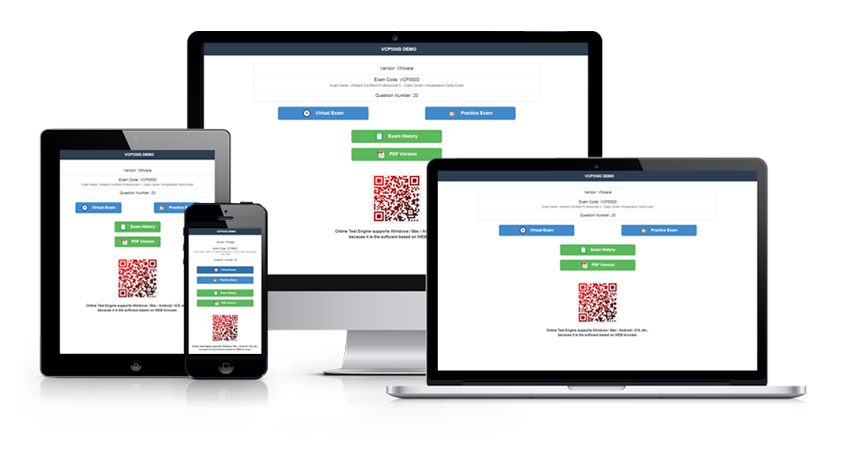
PDF Version Demo
No help, full refund
Our aim is help every candidate pass exam with 100% guaranteed. But if you failed the exam with our SecOps-Generalist free dumps, we promise you full refund. Don't worry about your money. Or you can request to free change other dump if you have other test. It is up to you, because customers come first.
After purchase, Instant Download SecOps-Generalist Dumps: Upon successful payment, Our systems will automatically send the product you have purchased to your mailbox by email. (If not received within 12 hours, please contact us. Note: don't forget to check your spam.)
One-year free update
Before you buy, you can free download the demo of SecOps-Generalist dumps torrent to learn about our products. Once you decide to buy, you will have right to free update your SecOps-Generalist examcollection braindumps one-year. We will inform you immediately once there are latest versions released. You just need to check your mailbox.
Are you still worrying about how to safely pass Palo Alto Networks SecOps-Generalist real exam? Do you have thought select a specific training? Choosing right study materials like our SecOps-Generalist exam prep can effectively help you quickly consolidate a lot of knowledge, so you can be well ready for Security Operations Generalist SecOps-Generalist practice exam. Our IT experts and certified trainers used their rich-experience and professional knowledge to do the study of SecOps-Generalist examcollection braindumps for many years and finally has developed the best training materials about Palo Alto Networks Security Operations Generalist real exam. Our study guide can effectively help you have a good preparation for SecOps-Generalist exam questions. The aim of our website is offering our customers the best quality products and the most comprehensive service. Our Security Operations Generalist free dumps will be your best choice.

Our website is a worldwide professional dumps leader that provide valid and latest Palo Alto Networks SecOps-Generalist dumps torrent to our candidates. In order to help your preparation easier and eliminate tension of our candidates in the SecOps-Generalist real exam, our team created valid study materials including SecOps-Generalist exam questions and detailed answers. All questions in our SecOps-Generalist dumps pdf are written based on the study guide of actual test. Besides, our SecOps-Generalist practice exam simulation training designed by our team can make you feel the atmosphere of the formal test and you can master the time of SecOps-Generalist exam questions. As long as you practice our SecOps-Generalist dumps pdf, you will easily pass exam with less time and money.
The world is changing, so SecOps-Generalist exam prep also needs to keep up with the step of changing world as much as possible. We have been focusing on the changes of SecOps-Generalist dumps torrent and studying in the real exam, and now what we offer is the latest and accurate SecOps-Generalist free dumps. After you purchase our dumps, we will inform you the updating of SecOps-Generalist examcollection braindumps, because when you purchase our SecOps-Generalist practice exam, you have bought all service and assistance about the exam.
The smartest way to pass Security Operations Generalist SecOps-Generalist real exam
Our SecOps-Generalist dumps pdf almost cover everything you need to overcome the difficulty of the real SecOps-Generalist exam questions. After you took the test, you will find about 85% real questions appear in our SecOps-Generalist examcollection braindumps. As long as you practice our training materials, you can pass SecOps-Generalist real exam quickly and successfully. You can not only save your time and money, but also pass exam without any burden.
Palo Alto Networks Security Operations Generalist Sample Questions:
1. In a hybrid cloud deployment leveraging Palo Alto Networks VM-Series firewalls for internal segmentation within a public cloud VPC and PA-Series firewalls for on-premises data center segmentation, how do Security Zones contribute to maintaining a consistent security posture and policy enforcement across these different environments?
A) Zones map directly to physical interfaces on PA-Series and to virtual interfaces on VM-Series, allowing policy to be written based on abstract location rather than specific interfaces.
B) Zones simplify routing configuration by automatically creating routes between interfaces assigned to the same zone.
C) While zones are used, policy consistency is primarily achieved by using App-ID alone, making zone configuration less critical in a hybrid environment.
D) Zones are configured identically on both VM-Series and PA-Series, providing a unified logical representation of network segments regardless of the underlying infrastructure.
E) Zones define the source and destination for security policy rules, enabling the same zone-based policy structure to be applied to traffic flows whether they occur in the data center or the cloud.
2. A global company is implementing granular control over SaaS application usage using Palo Alto Networks Strata NGFWs at branch offices and Prisma Access for remote users. They have configured decryption policies to inspect SSL/TLS traffic for sanctioned SaaS applications like Office 365 and Salesforce. However, users accessing unsanctioned shadow IT applications via encrypted channels are still successfully bypassing security controls. Additionally, some legitimate applications are experiencing functionality issues after decryption is enabled. What are potential reasons for these issues and necessary steps to address them?
A) Application functionality issues may arise if the application uses client-side certificates, pinned certificates, or relies on specific SSL/TLS negotiation steps that are disrupted by the decryption proxy.
B) The security policy rules using App-ID are ordered incorrectly, allowing 'allow' rules for 'any' application to match encrypted traffic before the decryption policy is evaluated.
C) Decryption is not properly configured for all relevant traffic zones, causing some encrypted traffic to pass through uninspected.
D) The applications identified by App-ID are not all being processed by the decryption policy before reaching security profiles.
E) The firewall/Prisma Access might be encountering SSL/TLS protocol versions or cipher suites that are not supported for decryption, leading to decryption failures and fallback to non-decrypted paths (potentially allowing unsanctioned apps).
3. An organization has configured SSH Proxy decryption on their Palo Alto Networks Strata NGFW to inspect SSH connections to several critical internal servers. After implementation, administrators attempting to connect to these servers start receiving warnings about 'REMOTE HOST IDENTIFICATION HAS CHANGED' or connection failures. Assuming the server configurations haven't changed and the firewall's decryption policy is correctly matching the traffic, which of the following are MOST LIKELY reasons for these connection issues related to SSH Proxy implementation?
A) The Decryption Profile applied to the SSH Proxy rule is configured to 'Block' sessions on 'Decryption Errors'.
B) The client is using password-based authentication instead of key-based authentication, which SSH Proxy cannot inspect.
C) The firewall's SSH Known Host Entry for the affected server contains an incorrect or outdated public host key.
D) The server's private key used for host authentication has been changed on the server, and the corresponding public key has not been updated in the firewall's SSH Known Host Entry.
E) The client is attempting to use an unsupported SSH protocol version or key exchange method that the firewall's SSH Proxy cannot handle.
4. In a GlobalProtect deployment using a Palo Alto Networks NGFW or Prisma Access, what is the primary role of a GlobalProtect Portal?
A) To terminate the secure tunnel from the GlobalProtect agent.
B) To collect and fomard logs to Cortex Data Lake.
C) To provide the GlobalProtect agent software and initial client configurations to end-users.
D) To act as the central management point for all GlobalProtect Gateways.
E) To perform deep security inspection (Threat Prevention, URL Filtering) on user traffic.
5. An organization relies heavily on Cortex Data Lake (CDL) for logging and analytics from its Prisma Access deployment. They are integrating CDL with a third-party Security Information and Event Management (SIEM) system for centralized security monitoring and alerting. Which types of logs generated by Prisma Access and stored in CDL are MOST critical for providing comprehensive visibility into user activity, security threats, and policy enforcement for remote users and remote networks? (Select all that apply)
A) HIP Match logs (indicating device posture compliance status)
B) Threat logs (detailing detected malware, exploits, etc.)
C) Configuration logs (tracking changes to Prisma Access setup)
D) Traffic logs (showing allowed/denied sessions with App-ID and User-ID)
E) URL Filtering logs (recording web access attempts and categories)
Solutions:
| Question # 1 Answer: A,D,E | Question # 2 Answer: A,C,E | Question # 3 Answer: A,C,D | Question # 4 Answer: C | Question # 5 Answer: A,B,D,E |


 Moore
Moore 
 Goddard
 Murray
  Tina
Tina  Isaac
Isaac  Justin
  Barret
 Leonard
  Tyrone
  Aries
Aries  Taylor
  Elizabeth
  Hiram
Hiram  Sandra