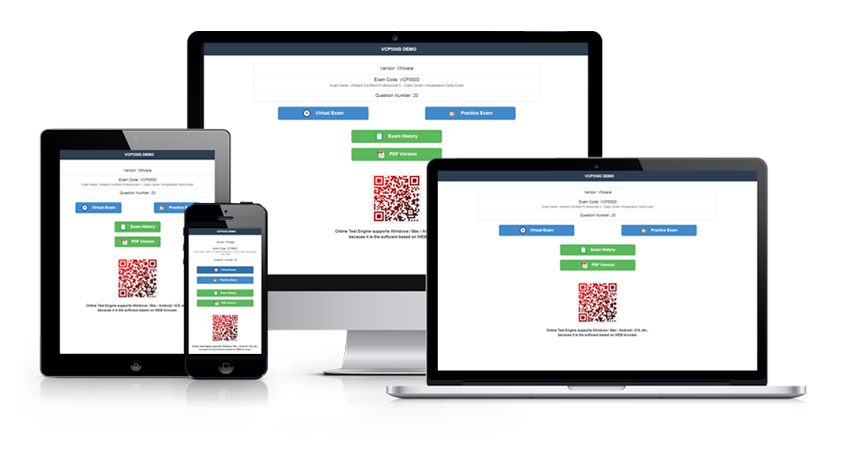
PDF Version Demo
The smartest way to pass Enterprise Architecture OGEA-103 real exam
Our OGEA-103 dumps pdf almost cover everything you need to overcome the difficulty of the real OGEA-103 exam questions. After you took the test, you will find about 85% real questions appear in our OGEA-103 examcollection braindumps. As long as you practice our training materials, you can pass OGEA-103 real exam quickly and successfully. You can not only save your time and money, but also pass exam without any burden.
No help, full refund
Our aim is help every candidate pass exam with 100% guaranteed. But if you failed the exam with our OGEA-103 free dumps, we promise you full refund. Don't worry about your money. Or you can request to free change other dump if you have other test. It is up to you, because customers come first.
After purchase, Instant Download OGEA-103 Dumps: Upon successful payment, Our systems will automatically send the product you have purchased to your mailbox by email. (If not received within 12 hours, please contact us. Note: don't forget to check your spam.)
Are you still worrying about how to safely pass The Open Group OGEA-103 real exam? Do you have thought select a specific training? Choosing right study materials like our OGEA-103 exam prep can effectively help you quickly consolidate a lot of knowledge, so you can be well ready for Enterprise Architecture OGEA-103 practice exam. Our IT experts and certified trainers used their rich-experience and professional knowledge to do the study of OGEA-103 examcollection braindumps for many years and finally has developed the best training materials about TOGAF Enterprise Architecture Combined Part 1 and Part 2 Exam real exam. Our study guide can effectively help you have a good preparation for OGEA-103 exam questions. The aim of our website is offering our customers the best quality products and the most comprehensive service. Our Enterprise Architecture free dumps will be your best choice.

Our website is a worldwide professional dumps leader that provide valid and latest The Open Group OGEA-103 dumps torrent to our candidates. In order to help your preparation easier and eliminate tension of our candidates in the OGEA-103 real exam, our team created valid study materials including OGEA-103 exam questions and detailed answers. All questions in our OGEA-103 dumps pdf are written based on the study guide of actual test. Besides, our OGEA-103 practice exam simulation training designed by our team can make you feel the atmosphere of the formal test and you can master the time of OGEA-103 exam questions. As long as you practice our OGEA-103 dumps pdf, you will easily pass exam with less time and money.
The world is changing, so OGEA-103 exam prep also needs to keep up with the step of changing world as much as possible. We have been focusing on the changes of OGEA-103 dumps torrent and studying in the real exam, and now what we offer is the latest and accurate OGEA-103 free dumps. After you purchase our dumps, we will inform you the updating of OGEA-103 examcollection braindumps, because when you purchase our OGEA-103 practice exam, you have bought all service and assistance about the exam.
One-year free update
Before you buy, you can free download the demo of OGEA-103 dumps torrent to learn about our products. Once you decide to buy, you will have right to free update your OGEA-103 examcollection braindumps one-year. We will inform you immediately once there are latest versions released. You just need to check your mailbox.
The Open Group OGEA-103 Exam Syllabus Topics:
| Section | Objectives |
|---|---|
| Topic 1: Introduction to TOGAF Standard | - Architecture domains overview - Core concepts of Enterprise Architecture |
| Topic 2: Architecture Development Method (ADM) | - ADM Phases (A–H) and Requirements Management - Preliminary Phase and Architecture Vision |
| Topic 3: Enterprise Continuum and Tools | - Architecture Repository and reference models |
| Topic 4: Architecture Domains | - Technology Architecture - Data Architecture - Application Architecture - Business Architecture |
| Topic 5: Architecture Governance | - Governance framework and compliance |
| Topic 6: Architecture Content Framework | - Deliverables, artifacts, and building blocks |
The Open Group TOGAF Enterprise Architecture Combined Part 1 and Part 2 Sample Questions:
1. Scenario
Your role is that of an Enterprise Architect, reporting to the Chief Enterprise Architect, at a technology company.
The company uses the TOGAF standard as the method and guiding framework for its Enterprise Architecture (EA) practice. The Chief Technology Officer (CTO) is the sponsor of the activity. The EA practice uses an iterative approach for its architecture development. This has enabled the decision-makers to gain valuable insights into the different aspects of the business.
The nature of the business is such that the data and the information stored on the company systems is the company's major asset and is highly confidential. The company employees travel a lot for work and need to communicate over public infrastructure. They use message encryption, secure internet connections using Virtual Private Networks (VPNs), and other standard security measures. The company has provided computer security awareness training for all its staff. However, despite good education and system security, there is still a need to rely on third-party suppliers for infrastructure and software.
The Chief Security Officer (CSO) has noted an increase in ransomware (malicious software used in ransom demands) attacks on companies with a similar profile. The CSO recognizes that no matter how much is spent on education and support, the company could be a victim of a significant attack that could completely lock them out of their important data.
A risk assessment has been completed, and the company has looked for cyber insurance that covers ransomware. The price for this insurance is very high. The CTO recently saw a survey that said 1 out of 4 businesses that paid ransoms could not get their data back, and almost thesame number were able to recover the data without paying. The CTO has decided not to get cyber insurance to cover ransom payment.
You have been asked to describe the steps you would take to strengthen the current architecture to improve data protection.
Based on the TOGAF standard, which of the following is the best answer?
A) You would request an Architecture Compliance Review with the scope to examine the company's ability to respond to ransomware attacks. You would identify the departments involved and have them nominate representatives. You would then tailor checklists to address the requirement for increased resilience. You would circulate to the nominated representatives for them to complete. You would then review the completed checklists, identifying and resolving issues. You would then determine and present your recommendations.
B) You would assess business continuity requirements and analyze the current Enterprise Architecture for gaps. You would recommend changes to address the situation and create a change request. You would engage the Architecture Board to assess and approve the change request. Once approved, you would create a new Request for Architecture Work to begin an ADM cycle to implement the changes.
C) You would ensure that the company has in place up-to-date processes for managing change to the current Enterprise Architecture. Based on the scope of the concerns raised, you recommend that this be managed at the infrastructure level. Changes should be made to the baseline description of the Technology Architecture. The changes should be approved by the Architecture Board and implemented by change management techniques.
D) You would monitor for technology updates from your existing suppliers that could enhance the company's capabilities to detect, react, and recover from an IT security incident. You would prepare and run a disaster recovery planning exercise for a ransomware attack and analyze the performance of the current Enterprise Architecture. Using the findings, you would prepare a gap analysis of the current Enterprise Architecture. You would prepare change requests to address identified gaps. You would add the changes implemented to the Architecture Repository.
2. Full Question:
Complete the sentence.
The Enterprise Continuum provides methods for classifying architecture artifacts as they evolve from
__________.
A) Solution Architectures to Solution Building Blocks
B) Foundation Architectures to reusable architecture assets
C) Generic Architectures to reusable Solution Building Blocks
D) Generic Architectures to Organization-Specific Architectures
3. Which of the following best summarizes the purpose of Enterprise Architecture?
A) Guiding effective change.
B) Governing the Stakeholders.
C) Controlling the bigger changes.
D) Taking major improvement decisions.
4. Please read this scenario prior to answering the question
You are employed as an Enterprise Architect working at a vehicle manufacturing company. The company specializes in buses and coaches. You are part of an Enterprise Architecture (EA) team that has responsibilities across multiple divisions of the company. EA provides the company with a comprehensive framework to develop and manage their manufacturing infrastructure, processes for component production, and design and testing systems.
The company has a corporate strategy that focuses on switching to electric power for its vehicles. It has invested heavily in a new standardized design, production efforts, and major components to use across all its product range. The company has multiple manufacturing plants in North America, Europe, and in Asia.
Customer demand has caused a backlog of orders because many customers want to have more environmentally friendly public transportation. There are not enough electronic components available, which is making it hard to produce products and meet customer demand. To address this issue, the company has started making the battery packs themselves and has hired new suppliers.
The EA team is working on a project to improve the process and systems to design, produce, and test the battery pack. As part of putting the new battery pack into production, changes to the assembly processes need to be made. A trial has been completed at a single location. The Chief Engineer, sponsor of the project, and the Architecture Board have approved the plan to roll out these changes to all plants.
Preliminary Architecture Contracts are being developed to detail the work needed to put in place the new processes for each location. The EA team leader has called a meeting to discuss the contracts. It is emphasized that the Architecture Contract will serve as the key connection between architecture and implementation organizations.
The company mixes internal teams with a few third-party contractors at the locations.
The Chief Engineer is worried that the implementation and deployment will not be consistent and of satisfactory quality.
The company has an established EA practice. It uses the TOGAF standard as the foundation for its work including the internal EA framework. Additionally, the company uses various management frameworks such as business planning, project management, and operations management.
Refer to the scenario
The EA team leader asks you how you would address the Chief Engineer ' s concern.
Based on the TOGAF standard, which of the following is the best answer?
A) The contracts must be used to manage the architecture governance processesacross the locations.Monitoring tools must be put in place to assess theperformance of each completed battery pack at each location. If a deviationfrom the contract is needed, the Architecture Board should allow theArchitecture Contract to be modified for the location. In such cases they shouldissue a new Request for Architecture Work to implement a modification to theArchitecture Definition.
B) The contracts must be checked to ensure they have flexibility. For changesundertaken by internal teams, a memorandum of understanding between theArchitecture Board and the implementation organization is needed. If acontract is issued to a contractor, it must be a fully enforceable legal contract. Ifa deviation from the Architecture Contract is found, the Architecture Boardmust grant a dispensation to allow the implementation organization tocustomize the process to meet their local needs.
C) The contracts must specify goals, measures, acceptance terms, and risks.Third-party contracts must be legally enforceable. It is advisable to establish aschedule of compliance reviews at key points in the implementation process.The Architecture Board must review all deviations from the ArchitectureContract and consider whether to grant a dispensation to allow the process tobe customized for local needs. Ensure that all dispensations are time-boundrather than indefinite.
D) The contracts must be checked to ensure they can be used to direct andcontrol the implementation teams. For contracts issued to third-partycontractors, they must be enforceable legal contracts. For internaldevelopment teams, a memorandum of understanding with the ArchitectureBoard is needed.
The Architecture Board must review all deviations from theArchitecture Contract and decide whether to grant a dispensation to allow theimplementation organization to customize the process to meet their localneeds.
5. Which statement about Requirements Management is most correct?
A) The purpose of Requirements Management is to process change requests
B) Requirements Management is a step of all ADM Phases
C) Stakeholder requirements are captured once in Phase A and managed throughout the ADM cycle
D) Requirements Management and stakeholder engagement are placed at the center of architecture development
Solutions:
| Question # 1 Answer: A | Question # 2 Answer: D | Question # 3 Answer: A | Question # 4 Answer: C | Question # 5 Answer: D |


 Maxwell
 Evangeline
  Morgan
 Edward
 Hunter
  Susan
Susan  Daisy
Daisy  Berger
  Uriah
Uriah  Renata
  Andre
Andre  Adam
Adam  Arlene
  Ives
Ives  Aubrey
  Charlotte
  Ingrid
  Sherry
  Hazel
Hazel