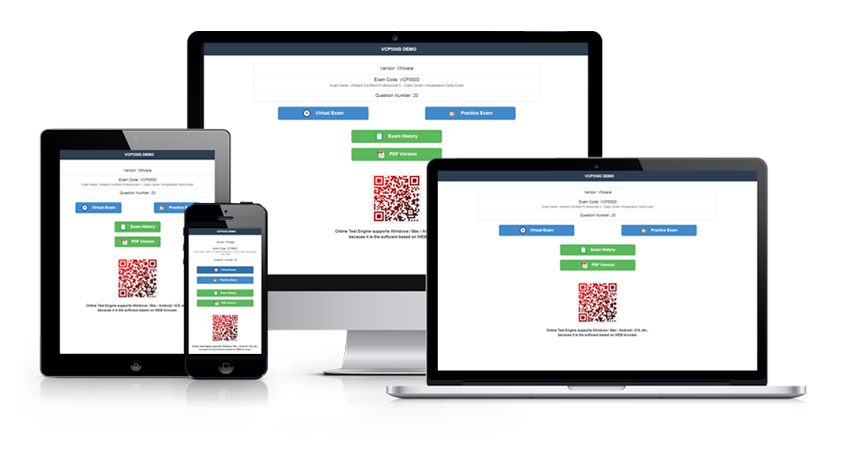
PDF Version Demo
The smartest way to pass SnowPro Core Certification NAS-C01 real exam
Our NAS-C01 dumps pdf almost cover everything you need to overcome the difficulty of the real NAS-C01 exam questions. After you took the test, you will find about 85% real questions appear in our NAS-C01 examcollection braindumps. As long as you practice our training materials, you can pass NAS-C01 real exam quickly and successfully. You can not only save your time and money, but also pass exam without any burden.
One-year free update
Before you buy, you can free download the demo of NAS-C01 dumps torrent to learn about our products. Once you decide to buy, you will have right to free update your NAS-C01 examcollection braindumps one-year. We will inform you immediately once there are latest versions released. You just need to check your mailbox.
Are you still worrying about how to safely pass Snowflake NAS-C01 real exam? Do you have thought select a specific training? Choosing right study materials like our NAS-C01 exam prep can effectively help you quickly consolidate a lot of knowledge, so you can be well ready for SnowPro Core Certification NAS-C01 practice exam. Our IT experts and certified trainers used their rich-experience and professional knowledge to do the study of NAS-C01 examcollection braindumps for many years and finally has developed the best training materials about SnowPro Specialty - Native Apps real exam. Our study guide can effectively help you have a good preparation for NAS-C01 exam questions. The aim of our website is offering our customers the best quality products and the most comprehensive service. Our SnowPro Core Certification free dumps will be your best choice.

Our website is a worldwide professional dumps leader that provide valid and latest Snowflake NAS-C01 dumps torrent to our candidates. In order to help your preparation easier and eliminate tension of our candidates in the NAS-C01 real exam, our team created valid study materials including NAS-C01 exam questions and detailed answers. All questions in our NAS-C01 dumps pdf are written based on the study guide of actual test. Besides, our NAS-C01 practice exam simulation training designed by our team can make you feel the atmosphere of the formal test and you can master the time of NAS-C01 exam questions. As long as you practice our NAS-C01 dumps pdf, you will easily pass exam with less time and money.
The world is changing, so NAS-C01 exam prep also needs to keep up with the step of changing world as much as possible. We have been focusing on the changes of NAS-C01 dumps torrent and studying in the real exam, and now what we offer is the latest and accurate NAS-C01 free dumps. After you purchase our dumps, we will inform you the updating of NAS-C01 examcollection braindumps, because when you purchase our NAS-C01 practice exam, you have bought all service and assistance about the exam.
No help, full refund
Our aim is help every candidate pass exam with 100% guaranteed. But if you failed the exam with our NAS-C01 free dumps, we promise you full refund. Don't worry about your money. Or you can request to free change other dump if you have other test. It is up to you, because customers come first.
After purchase, Instant Download NAS-C01 Dumps: Upon successful payment, Our systems will automatically send the product you have purchased to your mailbox by email. (If not received within 12 hours, please contact us. Note: don't forget to check your spam.)
Snowflake SnowPro Specialty - Native Apps Sample Questions:
1. Consider the following Snowflake Native App setup script snippet. The intention is to create an application role and grant it the necessary privileges to execute a stored procedure named 'MY PROCEDURE' within the application's data container. However, the script is not working as expected, and the stored procedure is failing with permission errors. Identify ALL of the issues in the following code.
A) The application role must be granted the 'USAGE privilege on the database that contains the schema.
B) The setup script does not require any additional privileges to assign 'EXECUTE on PROCEDURE
C) The 'EXECUTE' privilege on the stored procedure should be granted to the 'application' role, not 'app_public' .
D) The 'USAGE privilege on the schema containing the stored procedure is missing.
E) The application role 'app_public' cannot be created inside the setup script.
2. You are developing a Snowflake Native Application that uses a UDF to process data in the consumer's account. The UDF needs to access a specific table in the consumer's account but the UDF is running as Invoker's Rights (IR). Select all that apply to securely configure data access for this scenario using a data access framework and least privilege principles:
A) Grant 'SELECT privilege on the specific table directly to the application's invoker role.
B) Grant 'SELECT privilege on the specific table to the application's service user role. Configure the UDF to run as OWNER, and use 'EXECUTE AS OWNER.
C) Create an API integration that enables the UDF to securely authenticate and access the data through an external service.
D) Create a stored procedure running as OWNER, grant necessary privileges, then call this SP from UDF running as Invoker.
E) Create a secure view that exposes only the necessary columns of the table, granting 'SELECT privilege on the secure view to the application's invoker role. Configure the UDF to select from this secure view.
3. A data analytics company, 'Data Insights Pro', develops a Snowflake Native Application that provides advanced data visualizations. They want to publish this application on the Snowflake Marketplace as a public listing. Which of the following steps are required in addition to the standard application creation and packaging, specifically focusing on the public listing aspects? Assume the necessary roles and privileges are already granted.
A) Ensure that the application is compatible with all Snowflake regions before publishing to a public listing.
B) Define a pricing model using Snowflake's monetization features and configure the listing visibility to 'Public'.
C) Implement robust application usage monitoring and metering to ensure accurate billing if a commercial model is used.
D) Create a detailed listing description, including features, benefits, and example use cases, and define the support channels.
E) Submit the application package to Snowflake for security and compliance review before making it available on the Marketplace.
4. You are developing a Snowflake Native App that allows consumers to enhance their existing customer data with enrichment data provided by your app. The app relies on secure data sharing. To minimize data duplication and maximize query performance within the consumer's account, which of the following approaches offers the MOST optimized and secure way to deliver the enrichment data?
A) Create a secure view within the application package itself, which joins the application's enrichment data with consumer-provided data via an API integration. The consumer queries this secure view.
B) Use Snowflake Data Marketplace listing to provide enrichment data.
C) Utilize Snowflake Secure Data Sharing to directly share the enrichment data tables from the provider account to the consumer account. The consumer can then create views on the shared tables or query them directly.
D) Develop a Snowflake UDF (User-Defined Function) that, when called in the consumer account, retrieves the enrichment data from an external API endpoint (maintained in the provider account) and returns it.
E) Create a staging table in the provider account, load the enrichment data into it, and grant the consumer account SELECT privileges on this staging table. The consumer then creates their own table and copies the data.
5. A financial services company is developing a Snowflake Native App. It needs to securely access external market data via an API and store the processed results in a consumer-provided table. Considering security best practices and the Snowflake Native App Framework limitations, which of the following approaches represents the MOST secure and recommended implementation for this scenario?
A) Employ a Snowflake external function, configured with a service account, which invokes an API integration stored in the provider account. The external function returns the data, which is then inserted into a consumer-owned table using a stored procedure and INSERT statements, where the application role has been granted the necessary INSERT privilege.
B) Use a Snowflake external function with an API integration that passes the API key as a parameter. Store the processed data in a consumer-provided table using dynamic SQL.
C) Use a Snowflake external function with an API integration, configured with a service account that has the necessary permissions to access the API. Store the processed data in a consumer-provided table using stored procedures and INSERT statements using the application role.
D) Utilize a Java UDF with the 'network access' capability to call the external API directly from within the UDF. Store the processed data directly into a consumer- provided table by using the application role with INSERT privilege granted by consumer.
E) Utilize a Python UDF with the 'external network access' capability to call the external API directly from within the UDF. Store the processed data directly into a consumer-provided table by using the application role. API key is stored in snowflake secret.
Solutions:
| Question # 1 Answer: A,D | Question # 2 Answer: D,E | Question # 3 Answer: B,D,E | Question # 4 Answer: C | Question # 5 Answer: A |


 Kirk
Kirk 
 Jennifer
 Mark
Mark  Jill
Jill 
 Prima
Prima  Tyler
Tyler  Myra
Myra  Sigrid
  Cash
Cash  Payne
Payne  Muriel
  Zenobia
  Omar
Omar  Michelle
  Susanna